Tanzania's towns, farms, markets and museums tell stories reaching from early humans and Indian Ocean trade to independence and contemporary life. Understanding a market, a craft or an old building can be as revealing as a formal heritage visit.
Towns and cities
Arusha
Arusha is more than a safari and climbing departure point. The Arusha Declaration Monument connects the city to Tanzania's post-independence political history, while the German Boma and other historic buildings reflect earlier periods.
Markets and craft spaces offer different encounters with the city. The Central Market has an everyday commercial character; locally made jewellery, textiles and other crafts provide opportunities to understand contemporary work.
The mineral tanzanite, associated with the Mererani mining region, is also a subject of museums and specialist interpretation. A gemstone shop and an educational visit are not quite the same experience.
Outside the city, Arusha National Park and Mount Meru introduce a different setting of forests, lakes and walking activities.
Dar es Salaam
Dar es Salaam deserves more than a night between flights. The Askari Monument, Azania Front Lutheran Church and National Museum offer different starting points for the city's colonial, military and national histories.
At Kivukoni Fish Market, the city's relationship with the sea is visible in trade, boats and food. The Village Museum offers interpretations of architecture and cultural life from different parts of Tanzania.
A market is a workplace, not a performance. Observe its trade respectfully and ask before photographing people.
Stone Town
Stone Town on Zanzibar's main island is a historic urban landscape of stone buildings, narrow streets, carved doors, courtyards and markets. Its architecture reveals influences from Swahili, Arab, Indian and European connections over many centuries.
The Old Fort, former slave-market area and Anglican Cathedral, Forodhani Gardens and House of Wonders are associated with different aspects of that history. The House of Wonders, in particular, has been subject to major conservation work and changing access.
Stone Town is a living place as well as a UNESCO World Heritage property. Its food, religious life and shops belong to today's city, while its history of enslavement deserves careful and serious interpretation.
Explore the wider Swahili Coast.
Moshi
Moshi is often understood through Kilimanjaro, but the mountain's inhabited lower slopes are part of the experience. Coffee and banana cultivation, local markets, food and craft traditions offer a view of the Chagga highlands beyond the summit route.
Materuni is associated with a waterfall and community-led coffee experiences. Other nearby localities, including Marangu, Lyamungo and Kisangara, have different agricultural, craft and historical interests.
The history of Mangi Meli, a Chagga leader connected with resistance to German colonial rule, deserves more than a passing anecdote. A well-interpreted local history visit can make the mountain region's political past as compelling as its scenery.
Mererani and the history of tanzanite mining are another distinct subject. Working mines and tunnels require authorised professional access, not casual sightseeing.
Explore mountains and climbing.
Iringa
Iringa connects the southern highlands with stories of settlement, colonial rule and resistance. The Iringa Boma provides a cultural and historical starting point.
Nearby Kalenga is associated with Chief Mkwawa and the history of Hehe resistance to German colonial expansion. Isimila offers a different journey into the much deeper past, through its archaeological landscape and striking eroded formations.
The landscape helps make these histories tangible.
Tabora
The Tabora region has important connections to the nineteenth-century caravan economy. Kazeh, Kwihara and the Livingstone Tembe are associated with long-distance commerce and the arrival of travellers and merchants from different directions.
Equally important are the histories of Unyamwezi and leaders such as Chief Mirambo, whose political and military influence shaped the region. A narrative told only through the movements of European explorers would miss the African societies at the centre of the story.
Kigoma and Ujiji
Kigoma's port and lakeshore are part of contemporary western Tanzania. Ujiji is often introduced through the Stanley–Livingstone meeting, but its importance extends into the wider trading networks connecting Lake Tanganyika with the coast.
A memorial is a useful place to begin. It becomes more meaningful when placed alongside the histories of local traders, porters, settlement and people affected by enslavement.
Explore Tanzania's Great Lakes.
Butiama
Butiama, in the wider Mara region, is associated with Mwalimu Julius Kambarage Nyerere, Tanzania's first president. The Nyerere Museum offers a way to explore the political and personal story of independence and nation-building.
That story belongs within a lived-in region with its own communities, languages, livelihoods and landscapes.
Village life, farming and crafts
Mto wa Mbu
Mto wa Mbu, near Lake Manyara, is often noted for its mix of communities and farming. Banana cultivation, rice fields, irrigation, markets, local food and craftwork offer interesting ways to understand the settlement.
The contrast between the Rift Valley escarpment and the cultivated valley floor is particularly revealing. A locally guided walk can connect what is growing in the fields with how water and land are used.
Balaa Hill and Miwaleni feature in discussions of the surrounding landscape. Their appeal depends on the specific activity and local access, rather than on fitting every name into a single outing.
Managhat and other community settings
Near the Manyara region, Managhat is associated with Gorowa cultural history and local farming landscapes. Community-led interpretation may explore food, crafts, stories and daily livelihoods.
No cultural group can be reduced to one demonstration. The best encounters are shaped by what hosts choose to share and what visitors genuinely want to understand.
Markets, art and the making of things
A craft workshop can tell a different story from a souvenir stand. Tingatinga painting, beadwork, woodcarving, pottery, textiles and other traditions reflect skills, materials, markets and changing tastes.
Food can be just as revealing: local grains, bananas, coffee, spices and lake fish each connect an everyday meal to regional agriculture and trade.
Experiences involving private homes, religious practices, healers, schools or children call for particular care and should only happen through appropriate consent and safeguarding. They are not ordinary walk-in attractions.
Archaeology and early humans
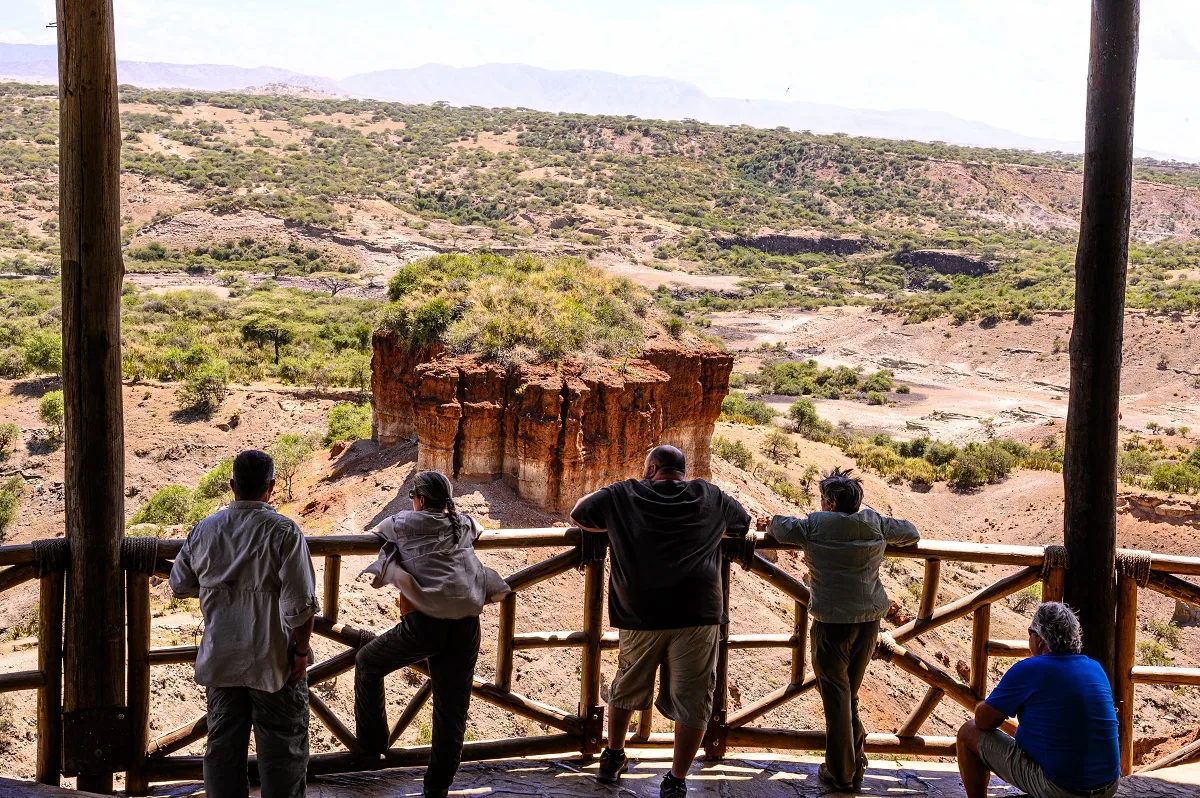
Olduvai Gorge
Olduvai Gorge is one of the important places in the study of early human evolution. Archaeological finds and research here have helped scientists reconstruct ancient environments, technologies and human ancestors.
The museum context is valuable because it explains not only what was found but how discoveries are interpreted. A fossil or stone tool gains meaning through its location, dating and relationship to other evidence.
Laetoli
Laetoli, in the broader Ngorongoro region, is associated with ancient hominin footprints that provide evidence of upright walking. Learning about the footprints through interpretation does not mean that the original protected site is open to unrestricted visits.
Engaruka
Engaruka, beneath the Rift Valley escarpment, is associated with archaeological remains of settlement and irrigation. Its interest lies in the ingenuity and organisation required to support agriculture in a changing environment.
Isimila and Kondoa
Isimila, near Iringa, combines evidence of early human activity with an unusual eroded landscape. Kondoa, including the rock-art sites around Kolo, connects Tanzania's archaeological heritage with artistic expression, belief and conservation.
Kondoa's rock-art sites are an inscribed UNESCO World Heritage property. Visits require respect for protected surfaces and local cultural meaning.
Other heritage leads include Igereke rock art and Kalenga's history of Hehe resistance, both deserving site-specific interpretation.
Explore the Ngorongoro Highlands.
Trade routes
Bagamoyo, Pangani, Kilwa, Stone Town, Tabora and Ujiji belong to different chapters of Tanzania's trading history.
The medieval ruins of Kilwa Kisiwani and Songo Mnara reveal an earlier Swahili maritime world. In the nineteenth century, networks of caravans connected coast and interior, moving goods and people through inland markets and communities.
The story includes African merchants and wage porters as well as enslavement and coercion. Understanding those differences matters more than reconstructing a picturesque 'slave trail'.
Read about the caravan roads and the Swahili Coast.
Forest and waterfall walks
Not every rewarding nature experience is a game drive. A forest walk can introduce water catchments, birds, plants, agricultural landscapes and the work of communities around them.
Waterfall walks include:
- Materuni, near Moshi, is closely connected with the Kilimanjaro foothills and locally offered coffee experiences.
- Marangu and Kinukamori connect to the Chagga-region landscape.
- Tululusia lies within Arusha National Park, with the park's walking arrangements.
- Sanje is an important feature of the forested Udzungwa Mountains.
- Kakombe, in Gombe's forest landscape, may be understood alongside chimpanzee trekking.
- Kalambo, in the Lake Tanganyika region, has a striking remote setting.
- Ngare Sero, Kisasa, Kidhege, Miwaleni and waterfall localities around Mount Meru provide further subjects for local exploration.
Access, permissions and effort differ between park waterfalls and sites managed by other authorities.
Explore the Eastern Arc Mountains.
Culture and conservation
Tanzania's cultural and natural landscapes overlap. Pastoralism in the Ngorongoro Highlands, fishing around Lake Tanganyika, forest management in the Eastern Arc and farming near wildlife corridors are examples of how local livelihoods connect with protected habitats.
A visitor who understands those relationships may see a landscape differently—even without participating in a specialised conservation programme.
Explore conservation and communities.
Choose by interest
| If you're curious about… | Begin with… |
|---|---|
| Independence and modern Tanzania | Arusha, Butiama and relevant museums |
| Swahili urban life and the Indian Ocean | Stone Town, Kilwa, Bagamoyo, Dar es Salaam |
| Trade and the inland past | Tabora, Ujiji, Bagamoyo |
| Early humans and archaeology | Olduvai, Laetoli, Isimila, Engaruka, Kondoa |
| Mountain farming and local food | Moshi, Materuni, Mto wa Mbu |
| Crafts and everyday work | Markets, studios and locally offered workshops |
| Forest landscapes and waterfalls | Udzungwa, Uluguru, Kilimanjaro foothills, Gombe |
Admissions and access
Some museums, antiquities sites and protected-area activities have published official charges. Others are managed by cultural institutions or local hosts.
KAONE's Browse fees can help with represented admission categories, and Calculate fees with supported charges. For a specific museum, cultural encounter or waterfall walk, check the opening times, host arrangements and access rules of that place.